Easy EC
Helping Young People Navigate Reproductive Healthcare
Building a nonprofit, digital platform, and service model around the realities of accessing emergency contraception.
Research Methods
While working as a health educator, I realized that the young people weren't struggling because emergency contraception resources didn't exist. They were struggling because accessing it was confusing and time-sensitive.
I initially created a paper guide to help young people navigate the landscape. As more people began relying on it, I realized:
There was an opportunity to redesign the experience around people's real lives.
Navigating Healthcare as a Teen
Young people faced barriers that had little to do with the healthcare itself.
They needed to understand where emergency contraception was available, what it would cost, whether financial support existed, how insurance might affect confidentiality, and complex regulation within a narrow window of time: 72 hours.
The information existed. The services existed. There wasn't a clear path through them, though.
The challenge was not creating another source of information. It was helping young people confidently navigate a fragmented healthcare system (often for the first time) during one of the most time-sensitive moments they might experience.
Building the Service
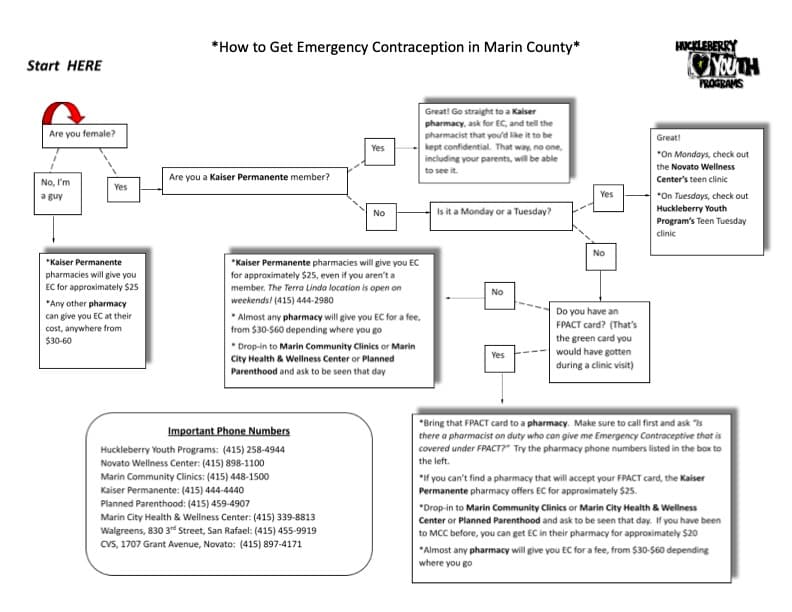
What began as a paper guide gradually became a broader service design challenge.
During graduate school at Yale, I chose to develop Easy EC in place of a traditional thesis. I conducted focus groups and surveys, founded a nonprofit organization, joined the inaugural Tsai Center for Innovative Thinking accelerator, and partnered with a web developer to turn the original guide into a digital platform.
My role moved continuously between research, product strategy, partnership development, fundraising, and implementation. Each decision required balancing what people needed with what the organization could realistically build and sustain.
From Paper Guide to Digital Service
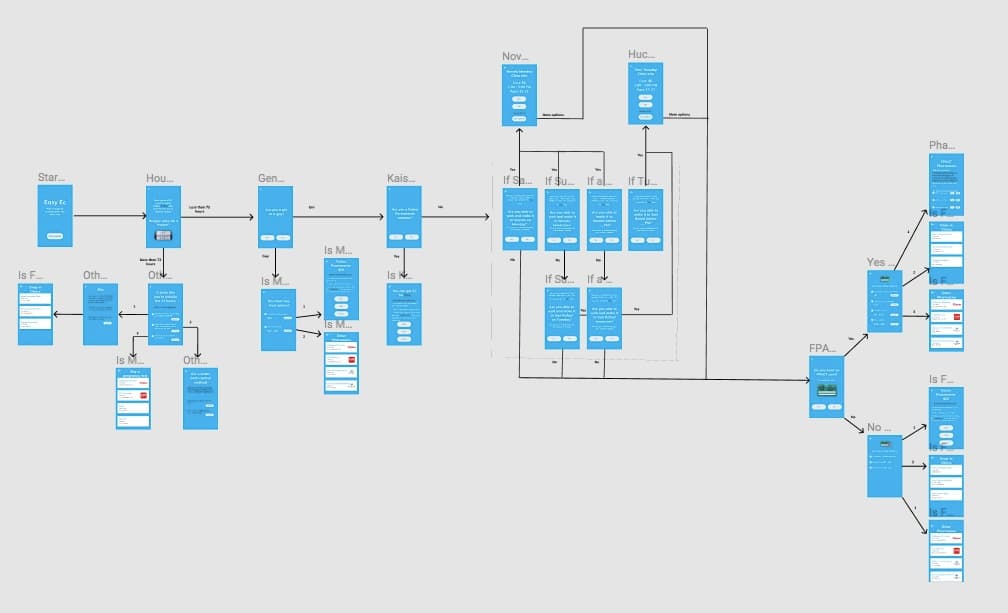
The original paper guide proved that people valued clear, decision-oriented support. The next challenge was making that experience easier to use, easier to maintain, and capable of adapting as healthcare programs, provider information, and state policies changed.
Rather than simply recreating the paper guide online, we redesigned the experience so people could receive personalized guidance based on their own circumstances while allowing the underlying information to remain current as providers, programs, and policies evolved.
The goal wasn't to digitize a flowchart. It was to make a complex healthcare system feel understandable.
Throughout development, I conducted concept testing and usability testing with potential users, using their feedback to refine navigation, simplify decision paths, and improve the overall experience before launch.
Because the platform was built around a database rather than static content, community partners could keep provider hours, financial assistance programs, and policy information current without redesigning the experience itself.
What Stayed With Me
Building Easy EC expanded my understanding of what research can ask an organization to do.
Sometimes an insight leads to a change in an existing product. In this case, it pointed toward an entirely new service, organization, and network of partnerships.
The experience taught me to think beyond recommendations and consider what implementation will actually require: priorities, resources, relationships, and the realities of the people expected to use or deliver the solution.
And now, I carry that perspective into every project.